

How to Win Battles Without a Fight
Caesar's Favorite Tactic to Win Every War

Caesar once made an entire Gallic army surrender to him. No major battle, no months or years long sieges, no big casualties. The same thing happened during the Civil War. Caesar, again using his favorite tactic, outmaneuvered an entire provincial Pompeian army. About 50,000 men surrendered and joined Caesar.
This is no coincidence. Caesar was a brilliant general who had figured out a way to win without a direct fight, often forcing his enemies to surrender or fight from losing positions.
Today, we will delve into Caesar’s favorite tactic and how you can use it in daily life.
Caesar’s masterpieces in Gaul and Hispania
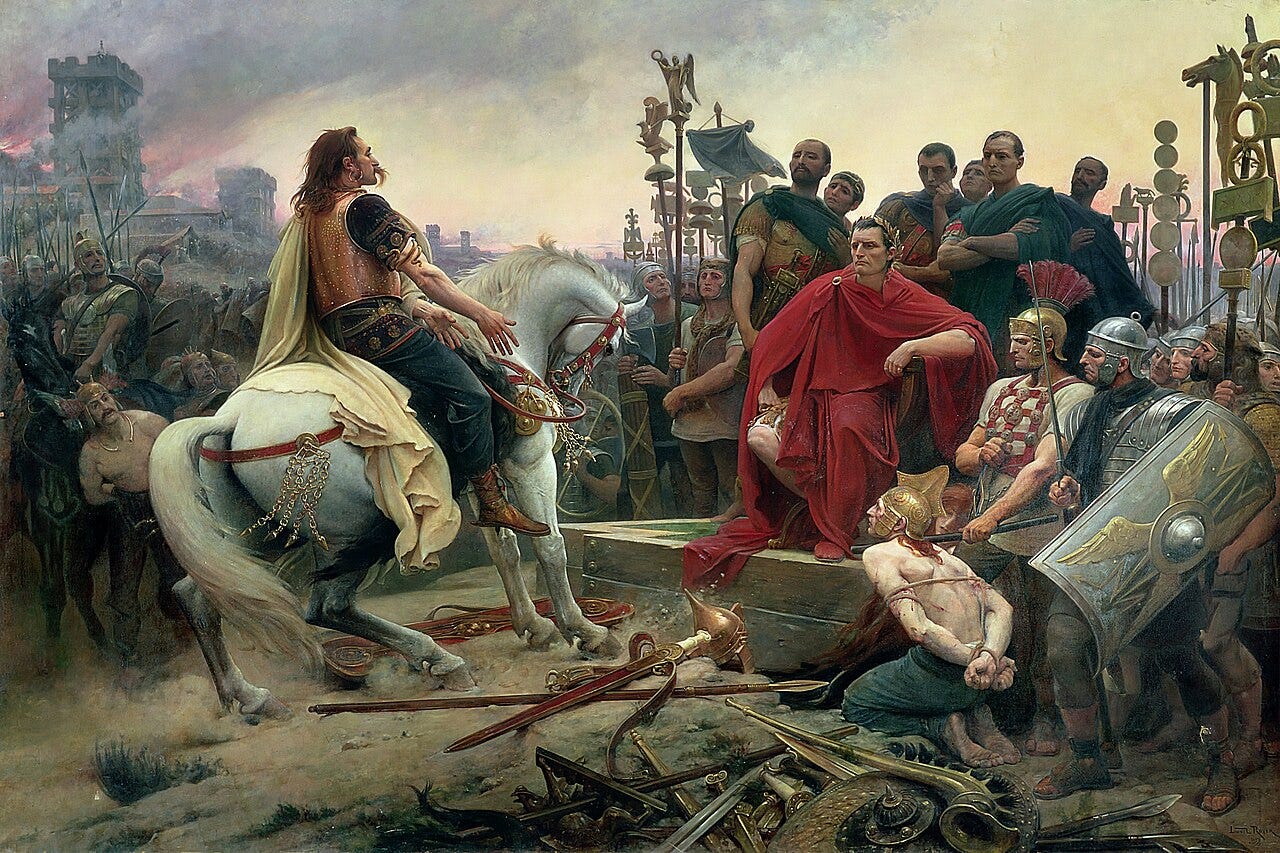
Alesia is often considered Caesar’s masterpiece. The greatest victory he ever won.
In early 52 BC, Vercingetorix started his famous revolt against the Romans. The Gauls had some early success, but the fortune of war began to shift.
Vercingetorix was forced to retreat. He and his 80,000 men fell back to the fortified town of Alesia. But instead of besieging it in the usual way, Caesar did something far cleverer…
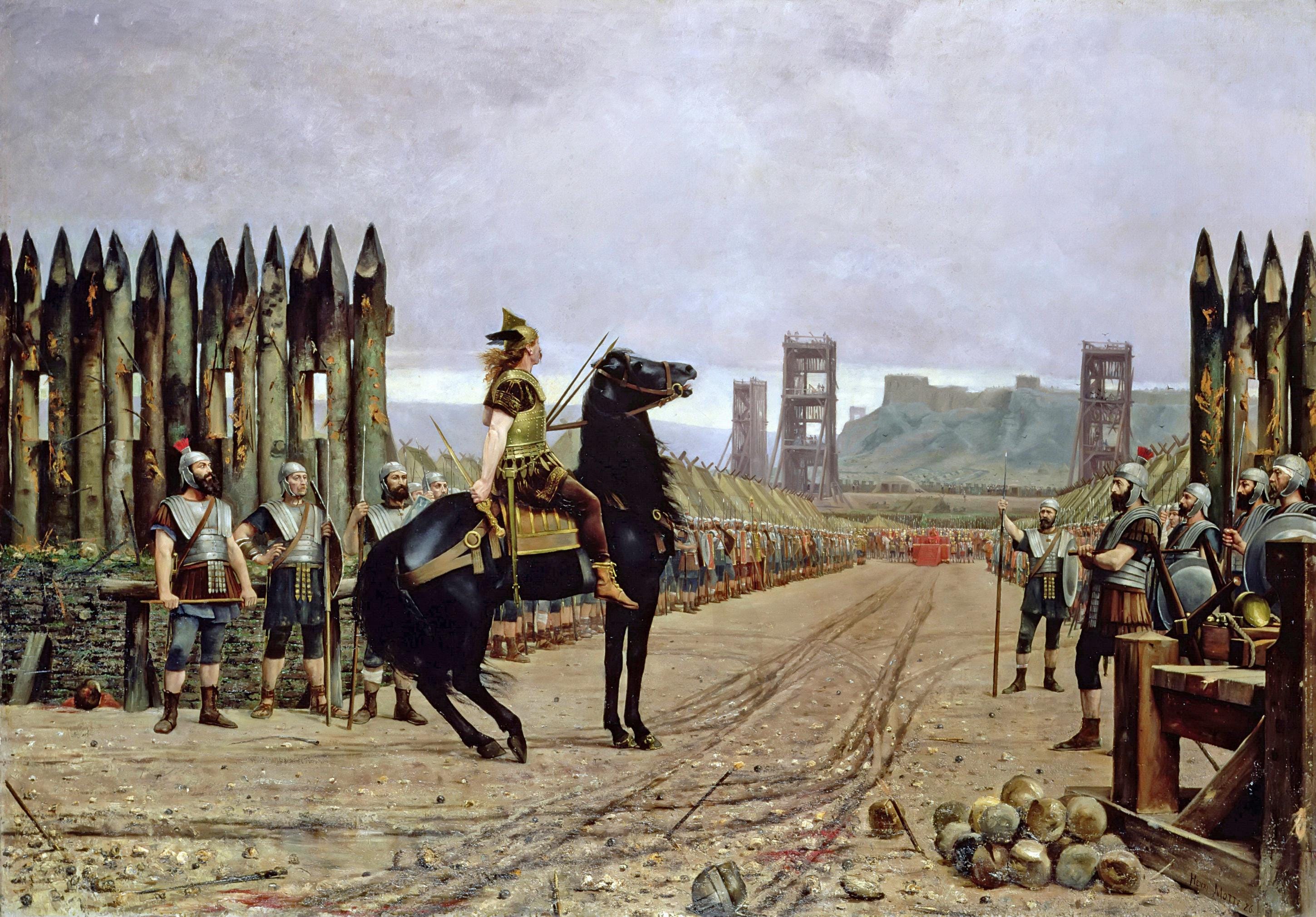
He fortified every hill around the city. He built two walls: one facing the town, the other protecting the Romans from outside attacks. The town was completely encircled.
It was only a matter of time before the Gauls ran out of supplies. Vercingetorix tried rationing food. Later he launched several desperate assaults to break the Roman blockade. But it was no use. In the end he surrendered his army to the Romans and handed over his weapons, ending Gallic resistance without a major battle.
The same fate awaited the Pompeian army led by Lucius Afranius and Marcus Petreius. Their forces camped near the town of Ilerda, and Caesar knew exactly where to strike. He cut the path to Ilerda by seizing and fortifying the key hills, disrupting the enemy’s supply lines.
The Pompeians tried to escape toward better-supplied territories, but Caesar’s men constantly harassed them. Faced with starvation, the entire army surrendered and joined Caesar’s cause.
Both victories were impressive because the enemy armies were not annihilated on the battlefield. They simply surrendered to Caesar’s smaller forces. Victory is not about raw strength, but something deeper.
Why this strategy is unbeatable
Cutting off supplies is the greatest tactic of all time. Every army relies on supplies. You can have the largest and strongest army in the world, but if you can’t feed it, the army becomes useless.
That’s why no one in the past could sustain truly huge armies for long. Supply lines became vast and fragile. It’s the same reason Mark Antony’s campaign against Octavian failed. It’s the same reason Napoleon failed in Russia.
They had vast armies, but no reliable supplies to guarantee long-term success.
Cut off your enemy’s supplies. Watch them helplessly as the situation gets worse day by day. When they are starving, no one is thinking about battle or victory, only about how to eat. Your fortifications and harassing units serve as a constant reminder that there is no escape. Morale plummets, soldiers revolt, and finally they give their allegiance to the one who will end their misery.
Position dominance and supply denial. Those are the core principles.
But how do you use this in modern times? You are no Roman general leading armies, so why should you care? Turns out, you can adapt the same principles today in your daily life.
How to use Caesar’s tactics in daily life
You can use these principles to discipline your children.
If your child refuses to do chores or homework, yelling rarely works. That direct confrontation can turn into long, daily battles that go nowhere. Instead, cut off their access to internet, phones, screens, and limit their allowance. The child is being “starved.” You quietly restore your dominance. Eventually the kid folds because all he can think about is getting those things back. Same tactic, different situation.
You can outshine your competition at work.
Let’s say you are competing with someone for a higher position. The best strategy is to volunteer for high-impact tasks that raise your visibility. Make new connections and build alliances. At the same time, quietly take over responsibilities your competitor used to handle. Cut off their chances of getting noticed. This way you establish dominance and leave your opponent with no room to shine.Simple and effective.
Lastly, you can even defeat the competition when applying for a job.
Make strategic contacts inside the company. Prove that you already understand their problems and spread your name through the right people. Once you’re on their radar, you’ve already won. You took the “hills,” you control the information and connections while others don’t even know the real supply lines exist.
The principles work everywhere. Search for the high ground and cut off your opponents’ supplies. Starve them into submission.
The greatest battles are won without direct attacks.
If you loved this post, consider supporting us by upgrading your subscription. Roman history is more than vibes, it’s about strategy and empire building.
If you want to learn more about Rome and how to apply the strategies of the greatest Romans, consider joining now:
Excellent article. Lots of ways to apply this beyond warfare, too...
Understand yourself and position to add value. This is most of my consulting work, in one post. Great job!