

How to learn history
Hint: everyone focuses on wrong aspects of it

When I was in school I hated history. Really.
We had to memorize dates, describe boring events, study economics, politics and so on. The course itself wasn’t bad. No ideologies pushed on us like in the US, and not just Holocaust lessons like in Germany.
But the way we were taught history was horrible.
Everything was about dates and events.
We learned history just to know it and get a good grade on the test. Nothing we could actually use in our lives.
So today I want to share how I got back into history and what I think is the best approach to learn it.
Reminder: Our publication is readers supported. Become a subscriber and get:
Deep articles 2 times per week
Access to our full archive of articles
Breakdowns on strategies, events and greatest men in Roman history
Join a growing movement. We are here because of wonderful people like you.
How I got into history
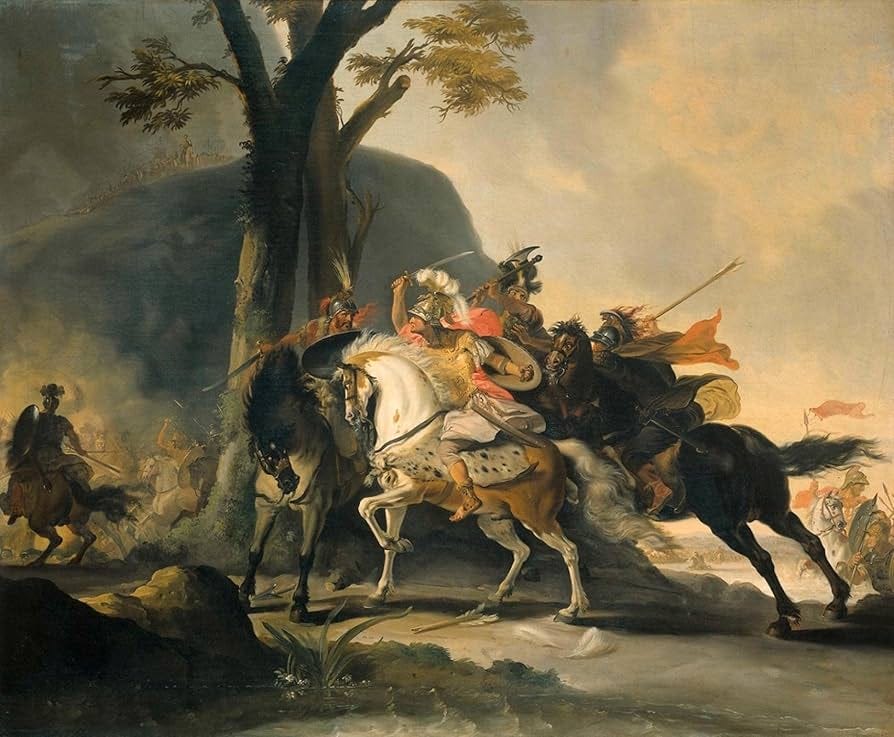
From an early age I was fascinated by history.
I loved flipping through encyclopedias about wars and ancient weapons. I was also raised in a patriotic household. My parents and grandfather used to tell stories about my country’s past, how they survived communism and everything that came with it.
I grew up on those stories and always wanted to learn more. That lasted until history class at school.
What was once a hobby turned into a chore.
Learn dates, learn events, prepare for the test.
There was no room for curiosity. You had to force yourself to read about whatever the school wanted, not what you cared about. I caught the school pessimism and just started hating the subject altogether. That wrong association killed my curiosity for a while.
Then in 9th grade I got a new history teacher. Unlike the ones before him, this guy spoke about history with an enthusiasm I had completely forgotten. In those first classes I remembered that history is more than a dull school subject.
So I started learning again. I let curiosity drive me. First I learned about my country, then Napoleon, then everything connected to Rome.
It became a hobby again. I started seeing patterns in modern events and understanding the world better.
And eventually I found my role models. I found inspiration to live and create from giants like Napoleon, Caesar and Bismarck, which later pushed me to start this account.
In my entire story it is visible what one simple tip I used to learn history. Not dates, but real history that can change your life.
The best and only way to learn history
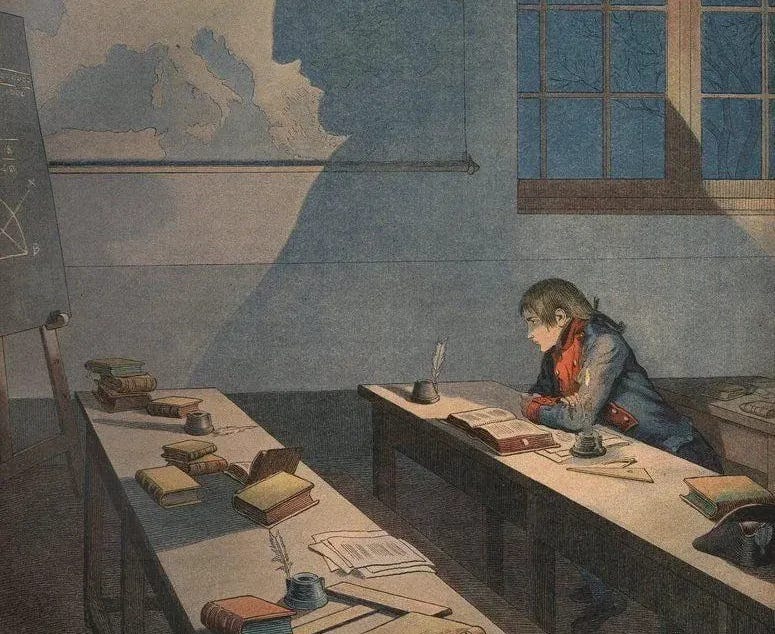
The approach I used was curiosity.
Like with any task, if you find it enjoyable and interesting it stops feeling like a burden and starts feeling like entertainment.
I was curious about my country and about Napoleon. I let that curiosity lead me. Sometimes I wouldn’t even finish one article. If I found something interesting (a new character, event, city, empire) I would just go straight to reading about that.
There was a period when I was interested in architecture and local manors. I ended up learning about many magnates of the Polish-Lithuanian Commonwealth simply by searching their manors and following wherever curiosity took me.
As I read about these great people I tried to put myself in their place. To understand their values, their courage, their determination.
The more I read, the more the world started looking like a game, like something manageable.
Because the more you are exposed to their wins, the more you feel that you can achieve the same. And by learning about their mistakes, you avoid rushing into the same ones yourself.
Let your curiosity lead and you can learn anything relevant to you.
If you are interested in engineering, let that bring you to the engineers of the past. If you love art, let the discovery of artists take you on a journey.
Once you learn about the great men and women in your field, you will understand what made them masters, how they thought and how they created.
Those insights can make you a better engineer, a better artist, or better at whatever else you care about.
Why this approach works?
The curiosity approach works because you are reading about what interests you and what you actually care about.
That triggers your dopamine receptors. And most importantly, by letting curiosity lead you, you avoid the exact mistake schools make.
You read what is relevant to you and don’t get lost in dull events, politics or economics.
I know people should understand world history, not just their favorite niche. But if we force people to read about things they don’t care about, they will learn nothing.
And as I mentioned, history has repeating patterns and everything is interlinked.
A person learning about WWII will get exposed to WWI, and from there to the Franco-Prussian War and many other events. History is connected, and if you follow what interests you, you will end up learning about everything else in a much more natural way.
Spend more time with history books and biographies. About the people and events you are actually curious about. Drop the self-help and psychology books for a while. Learn from something that already worked.
— Modern Caesar
My favorite class in HS, really. Freshman year(‘78) had an excellent Ancient History course taught by a woman who had been there since WWII. She advised us to watch “I, Claudius” on Masterpiece Theater. Loved it.
Excellent